A failed inspection can turn a nearly finished commercial project into a stalled project overnight. One missing verification, one incomplete report, or one uncorrected deficiency can delay occupancy, push trades back onto site, frustrate tenants, and create pressure between owners, contractors, consultants, and municipal reviewers.
For commercial construction and renovation teams, the issue is rarely just the failed inspection itself. The bigger problem is the chain reaction that follows.
When people search what happens if a building inspection fails, they are usually not looking for theory. They are dealing with a real project delay, or they are trying to avoid one before final inspection. The short answer is this: the project cannot move forward until the deficiency is corrected, verified, documented, and accepted by the proper authority.
For fire alarm systems, fire suppression systems, structural changes, or other life safety items, that process often requires engineering review. A contractor repair alone may not be enough.
Why Inspection Failures Cause Major Delays
Commercial construction projects rely on coordination between designers, contractors, engineers, inspectors, and property owners. When one step gets missed, the problem often appears late in the project timeline.
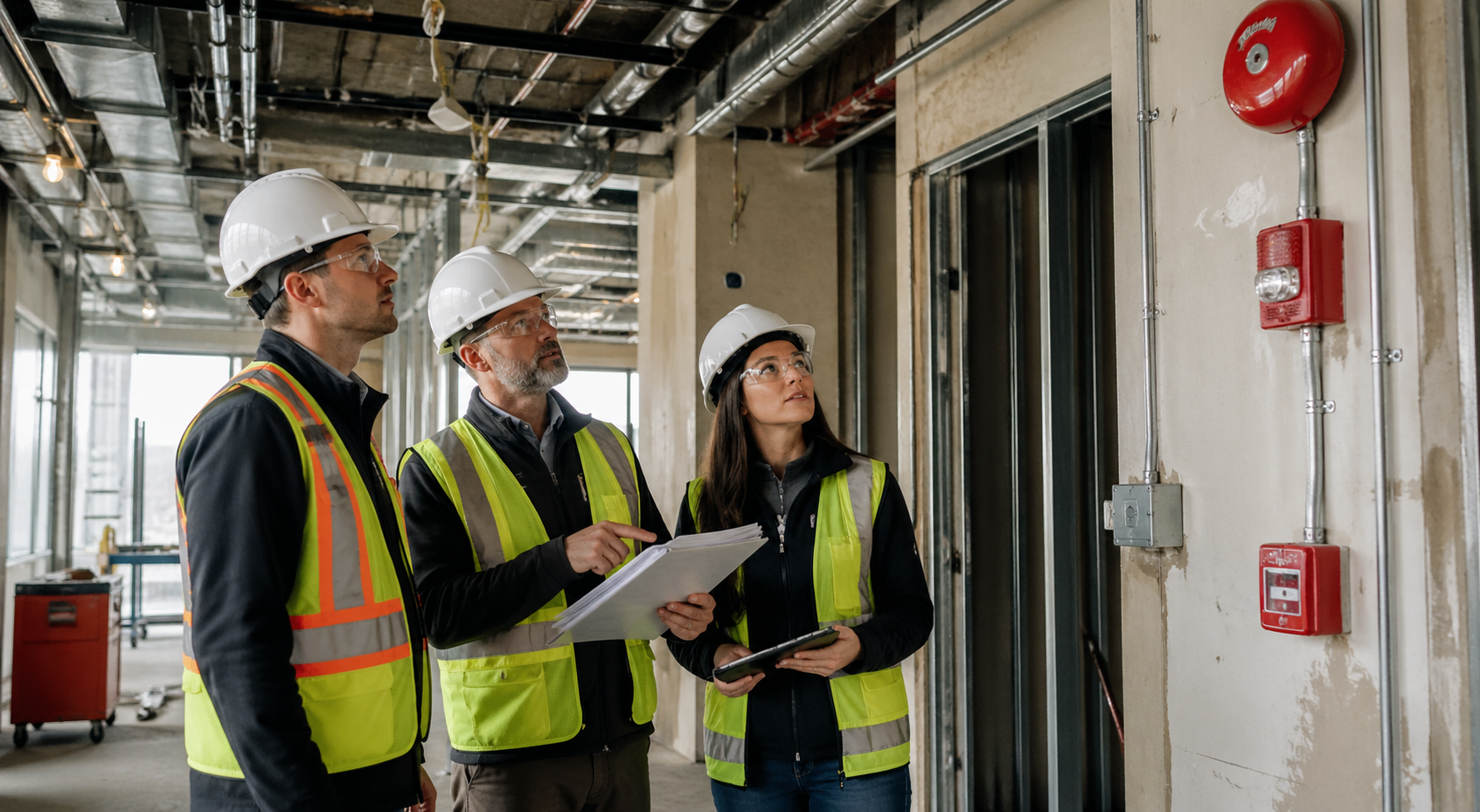
A fire alarm system may be installed but not properly verified. A tenant improvement may trigger code upgrades the team did not anticipate. A layout change may affect life safety systems without updated drawings being submitted.
The City of Calgary notes that building owners are responsible for ensuring fire protection systems are properly maintained and that inspections, testing, and maintenance should be completed by qualified personnel. Failure to comply with these requirements can lead to enforcement action under the Safety Codes Act.
Inspection failures can affect:
- occupancy timelines
- tenant move-ins
- lease start dates
- contractor schedules
- municipal approvals
- owner confidence
In many cases, the failed inspection is the first sign that engineering oversight was needed earlier in the process.
What Happens If Building Inspection Fails?
When a commercial inspection fails, the authority having jurisdiction usually identifies deficiencies that must be corrected before approval can be issued. The exact process depends on the type of inspection, project scope, municipality, and deficiency.
In practical terms, a failed inspection usually leads to five things.
1. The Deficiency Is Documented
The inspector will identify what did not meet the required standard. This may involve notes, a report, a correction notice, or a request for supporting documentation.
For life safety systems, the deficiency may relate to:
- missing fire alarm verification
- incorrect device operation
- incomplete sprinkler documentation
- missing emergency lighting requirements
- incomplete integrated systems testing
- unapproved design changes
- missing engineering letters
- field work that does not match the approved drawings
This is where many project teams realize the issue is bigger than a quick site fix.
2. Occupancy or Final Approval May Be Delayed
A commercial space may look finished, but that does not mean it is approved for use.
If the deficiency affects fire protection, existing, structural safety, emergency systems, or code compliance, the project may not receive final approval until the concern is resolved. Calgary’s fire safety plan guidance also notes that certain buildings and businesses require fire safety plans under the National Fire Code, Alberta Edition, including buildings that require a fire alarm system under the Alberta Building Code.
For developers, landlords, and contractors, this can create financial pressure fast.
A one-week delay can affect rent commencement, staffing, inspections by other parties, and trade availability. A longer delay can damage relationships and trigger added costs.
3. Contractors May Need to Return to Site
Inspection failure often means rework.
That may include:
- correcting installation deficiencies
- replacing incorrect devices
- adjusting fire alarm programming
- repairing sprinkler deficiencies
- updating drawings
- exposing concealed work
- coordinating retesting
- gathering missing documents
The challenge is that trades may have already moved on to other jobs. Getting everyone back on-site can take longer than the repair itself.
4. Engineering Review May Be Required
This is the step many teams underestimate.
If the deficiency involves design intent, code interpretation, life safety performance, structural adequacy, or fire protection verification, an engineer may need to review the issue before the project can move forward.
This can include:
- reviewing approved drawings against installed work
- confirming code requirements
- identifying the required corrective action
- documenting compliance
- issuing engineering letters or reports
- coordinating with the contractor or authority
This is where a firm providing engineering consulting services can help bring order to the process. The goal is not just to “fix the note.” The goal is to confirm the project satisfies the right requirement in a way that can be accepted.
5. Reinspection or Re-Verification Is Needed
Once corrections are complete, the project usually needs some form of confirmation.
That may mean:
- a reinspection by the authority
- fire alarm re-verification
- sprinkler deficiency clearance
- updated documentation
- an engineering sign-off
- revised drawings
- additional testing
For fire alarm systems, this is where the phrase how to fix failed fire alarm inspection becomes important. The fix is not simply replacing a device or changing programming. The system must be corrected, retested, and documented properly.
Why Fire Alarm Inspection Failures Are Especially Painful
Fire alarm inspections can become complicated because multiple systems are tied together. A system may appear functional but still fail inspection because of documentation gaps, programming issues, or coordination problems.
Common reasons include:
- missing verification documentation
- incorrect annunciator information
- unresolved trouble signals
- fire alarm work not matching approved drawings
- incomplete testing records
- issues tied to elevator recall or supervisory signals
- missing coordination with other life safety systems
For contractors trying to figure out how to fix failed fire alarm inspection, the first step is to separate symptoms from root causes.
A failed horn strobe is a symptom. The root cause may be incorrect design assumptions, installation changes, missing verification steps, or a coordination gap between trades.
How to Fix Failed Fire Alarm Inspection Issues
Fixing a failed fire alarm inspection requires a structured process. Rushing through corrections often creates repeat failures.
1. Review the Inspection Notes Carefully
Start with the actual deficiency list. Avoid relying on verbal summaries passed between trades or consultants.
Confirm:
- what failed
- where it failed
- what documentation is missing
- who is responsible for correction
- if engineering review is required
This avoids confusion and helps prevent incorrect fixes.
2. Compare the Installed Work Against Approved Drawings
Many inspection failures happen because field conditions changed during construction.
Walls move. Devices are relocated. Ceiling layouts shift. Tenant requirements change late in the process.
The installed system needs to be checked against the approved design and applicable code requirements.
This is especially important for projects involving fire protection engineering, where life safety coordination affects multiple systems at once.
3. Complete the Corrective Work Properly
Corrective work may involve:
- relocating devices
- correcting wiring or programming
- updating annunciator information
- resolving trouble conditions
- coordinating sprinkler and mechanical systems
- updating drawings and verification documents
The correction needs to address the real issue, not just the visible symptom.
4. Re-Test and Document the System
Once corrections are complete, the system needs to be retested and documented properly.
That may include:
- device testing
- signal confirmation
- supervisory and trouble testing
- updated verification reports
- revised drawings
- engineering letters
Documentation matters because approvals are based on evidence, not assumptions.
Why Failed Inspections Often Trace Back to Early Planning
Most failed inspections are not created on inspection day.
They usually begin earlier, when a project team misses one of these questions:
- Did the renovation change occupancy use?
- Did the tenant improvement affect life safety systems?
- Did the fire alarm design account for the final layout?
- Did the sprinkler system need a new review?
- Did structural changes require engineering sign-off?
- Did emergency power requirements apply?
- Did the approved drawings match the final build?
- Did all verification steps happen before inspection?
Failed inspections are often not isolated incidents. They are signs that a code trigger was missed earlier.
What Contractors Should Do Before Calling for Inspection
A better inspection outcome starts before the inspector arrives.
Commercial contractors should confirm:
- approved drawings match installed work
- fire alarm verification is complete
- sprinkler deficiencies are resolved
- required reports are available on-site
- engineering letters are complete if required
- life safety documentation is current
- trade deficiencies are closed before inspection
The City of Calgary’s fire safety maintenance guide includes a checklist-style approach to on-site records and maintenance responsibilities, which is useful for owners and managers trying to keep documentation organized.
The best project teams do not wait for the inspector to find gaps. They do a pre-check first.
When Engineering Support Is Needed
Not every failed inspection requires engineering involvement. Some deficiencies are simple corrections completed by the appropriate trade.
But engineering review is usually needed when the issue involves:
- fire alarm verification
- sprinkler system compliance
- structural changes
- emergency power systems
- smoke control
- code interpretation
- changes from approved drawings
- municipal requests for engineering documentation
MNA Engineers supports commercial construction and renovation projects across fire protection, electrical, mechanical, and structural disciplines.
The team helps contractors, developers, and property managers:
- review deficiencies
- identify code-related concerns
- coordinate corrective actions
- support verification and documentation
- reduce repeated inspection delays
For projects involving contractor coordination and procurement, MNA also provides bids and tenders support to help teams define scope and reduce avoidable project issues earlier in the process.
You can also review Our Projects to see the types of commercial environments MNA supports.
Failed Inspections Are Fixable, But They Need the Right Process
A failed inspection does not mean a project has gone wrong beyond repair. It means something needs to be corrected, confirmed, and documented before the project can move forward.
If your team is dealing with a failed inspection, or trying to avoid one before final approval, the best move is to get clear technical guidance early.
MNA Engineers helps commercial contractors, developers, property managers, and building owners resolve engineering-related inspection issues with practical, code-aware support.