
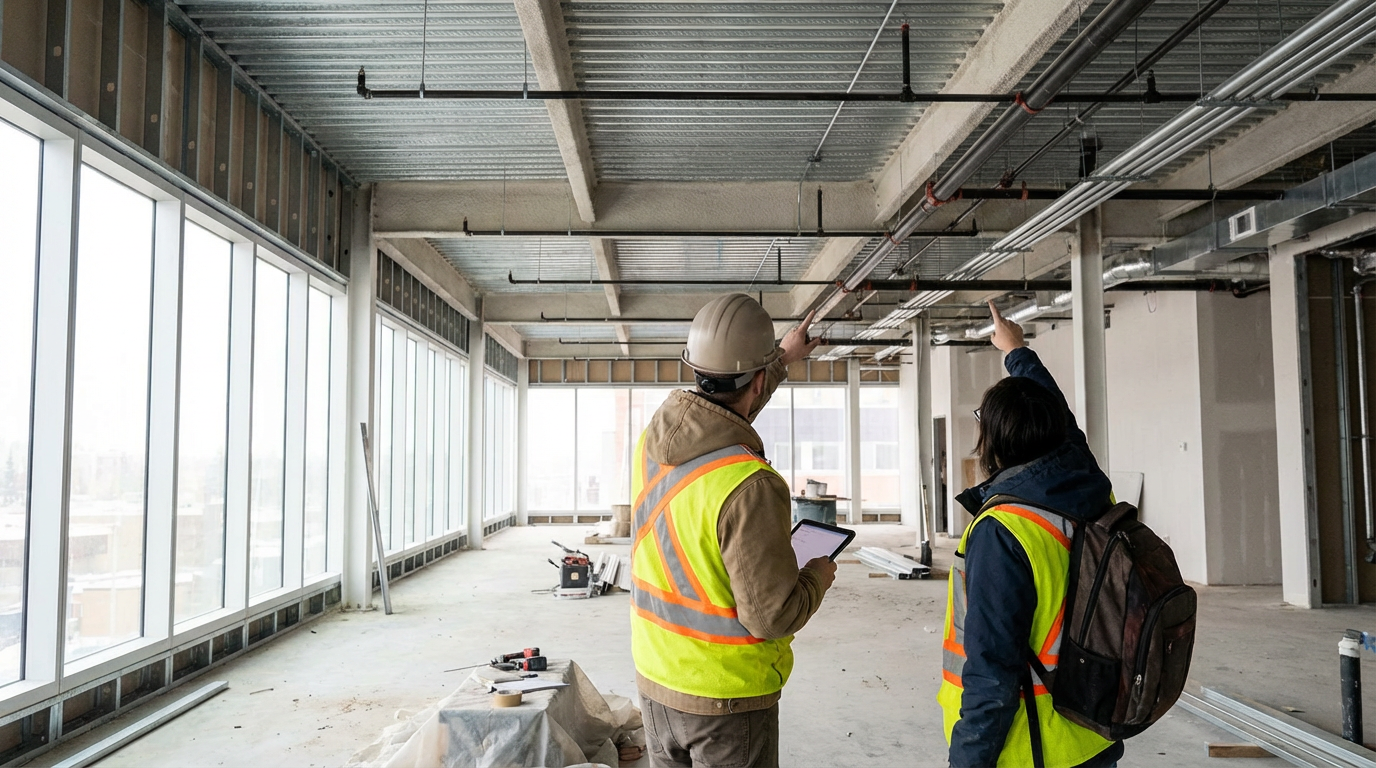
A fire sprinkler system often sits quietly above ceilings and behind walls, doing its job without much attention. That changes fast when a building is nearing occupancy and verification results come back with deficiencies. Suddenly, schedules tighten, costs rise, and projects stall while teams scramble to fix issues that could have been addressed earlier.
Across Calgary and throughout Alberta, fire suppression system verification remains one of the most common reasons commercial buildings face delayed occupancy. These delays rarely come from a single mistake. They usually stem from coordination gaps, documentation issues, or system details that were overlooked during design or construction.
This guide breaks down the most frequent fire sprinkler system deficiencies that delay occupancy, why they happen, and how project teams can reduce risk long before an inspector walks the site.
Why Fire Sprinkler Verification Holds So Much Weight
A fire sprinkler system is a life safety system. Its role is simple and critical: control or suppress fire early, limit spread, and give occupants time to exit safely. Because of that role, verification standards are strict, documentation expectations are high, and tolerance for shortcuts is low.
In Calgary, building owners carry direct responsibility for compliance with fire safety codes. The City of Calgary outlines these responsibilities clearly in its Building Owner Responsibilities – Fire Safety Codes document, which sets expectations around maintenance, testing, and ongoing system performance.
Verification confirms that a fire suppression system performs as designed and aligns with code, approved drawings, and site conditions. When issues surface late, they can affect:
- Occupancy permits
- Insurance approvals
- Tenant move-in schedules
- Final payments and holdbacks
Where Most Fire Sprinkler System Deficiencies Begin
Fire sprinkler deficiencies rarely appear overnight. Most take shape earlier in the project but remain hidden until verification.
Design and Coordination Gaps
Fire suppression systems interact with structural, mechanical, and electrical components. When coordination slips, conflicts show up later as clearance issues, incorrect head placement, or inaccessible components.
Common coordination gaps include:
- Sprinkler heads obstructed by ducts or lighting
- Pipe routing conflicting with beams or structural elements
- Ceiling changes made without updating sprinkler layouts
Field Changes Without Engineering Review
Renovations and tenant improvements often evolve during construction. Walls move. Ceiling heights shift. Uses change. If the fire sprinkler system is not reviewed after these changes, verification can fail.
Documentation That Does Not Match the Site
Inspectors verify systems against approved drawings and specifications. When as-built conditions differ from drawings, even if the system functions, deficiencies are triggered.
The Most Common Fire Sprinkler System Deficiencies
Below are the issues that most often delay occupancy during fire suppression system verification.
Improper Sprinkler Head Placement
Sprinkler heads must meet spacing, coverage, and clearance requirements. Common failures include:
- Heads placed too close to walls or obstructions
- Incorrect spacing in storage or high-pile areas
- Heads installed at the wrong elevation
Even small deviations can affect spray patterns and system effectiveness.
Obstructed Coverage Areas
Ceiling features, soffits, bulkheads, and lighting changes can block sprinkler discharge. Verification often flags:
- Heads blocked by decorative elements
- Insufficient clearance below sprinklers
- Obstructions introduced after original installation
Missing or Incorrect Hydraulic Calculations
Hydraulic calculations prove that water supply meets system demand. Deficiencies occur when:
- Calculations are outdated
- System changes are not recalculated
- Assumptions no longer match site conditions
Valve and Zone Identification Issues
Every fire sprinkler system relies on clear identification and accessibility. Verification issues arise when:
- Valves are not labeled
- Zones do not match drawings
- Access panels are missing or blocked
Incomplete Testing Records
Testing is mandatory. Verification often fails due to:
- Missing pressure test results
- Incomplete flow test documentation
- Inconsistent records between contractors and engineers
Fire Suppression System Issues That Extend Beyond Sprinklers
A fire suppression system includes more than pipes and heads. Delays often happen when connected systems are not aligned.
Fire Alarm and Sprinkler Interface Problems
Sprinkler flow switches and alarms must communicate properly. Common problems include:
- Incorrect device programming
- Delayed alarm activation
- Missing supervision signals
If you are planning construction work, this coordination issue is discussed further in this guide on construction fire safety planning.
Water Supply and Pressure Concerns
Municipal supply, pumps, and backflow devices all play a role. Verification issues appear when:
- Flow rates fall short of design
- Backflow preventers are improperly installed
- Fire pumps are not commissioned correctly
Renovations and Tenant Improvements Create Extra Risk
Renovation projects create more verification failures than new builds. The reason is simple: existing conditions vary, and assumptions made during design do not always match reality.
During commercial renovations:
- Existing fire sprinkler systems may not support new layouts
- Occupancy classifications can change system requirements
- Older systems may not meet current code without upgrades
If your project involves interior changes, this renovation-focused guide provides added context on planning and incentives.
Schools and High-Occupancy Spaces Face Added Scrutiny
Facilities with vulnerable occupants or high population density face stricter review. Fire sprinkler system verification in schools, healthcare, and assembly spaces often identifies:
- Inadequate coverage in renovated areas
- Systems not aligned with updated room use
- Documentation gaps from phased upgrades
Fire safety planning for educational buildings is explored further here.
How Early Engineering Involvement Reduces Delays
Many occupancy delays trace back to late-stage problem solving. Bringing engineering oversight into the process earlier reduces risk.
Coordinated Fire Protection Engineering
Early review helps align:
- Architectural layouts
- Mechanical systems
- Structural elements
- Fire suppression system design
This coordination is a core part of fire protection engineering services.
Integrated Engineering Review
Fire sprinkler systems rarely operate in isolation. Electrical power, alarms, mechanical systems, and building structure all influence performance. Integrated review through engineering consulting services reduces blind spots.
Bid and Tender Review
Verification issues often start at procurement. Reviewing bids and scopes helps ensure contractors account for:
- Verification requirements
- Documentation responsibilities
- Testing coordination
Support with bids and tenders can prevent downstream gaps.
Real-World Impact: What Delays Actually Cost
When fire sprinkler system deficiencies delay occupancy, costs extend beyond correction work.
Typical impacts include:
- Extended general conditions
- Liquidated damages exposure
- Lost rental income
- Tenant dissatisfaction
- Scheduling conflicts with inspectors
These outcomes are visible across many completed projects.
Practical Steps to Reduce Fire Sprinkler Verification Risk
While every project is different, consistent steps lower risk:
- Review sprinkler layouts after any layout change
- Confirm documentation matches site conditions
- Schedule testing early, not at the last minute
- Coordinate alarm, sprinkler, and power systems
- Involve fire protection engineering before construction wraps
These steps help prevent verification from becoming a surprise.
Why Occupancy Delays Are Avoidable
Most fire suppression system verification failures are not technical mysteries. They are the result of missed coordination, rushed documentation, or late-stage fixes.
Projects that treat verification as a final checkbox often pay the price. Projects that treat it as part of the build process move faster, face fewer surprises, and achieve occupancy with fewer setbacks.
Keeping Projects Moving Forward
A fire sprinkler system is silent until it is needed, but verification makes it visible. When deficiencies appear late, schedules suffer. When systems are reviewed, coordinated, and documented early, verification becomes far smoother.
If you are planning a commercial build or renovation in Calgary or across Alberta, early attention to fire suppression system requirements can protect timelines, budgets, and occupancy targets.
Take the Next Step
If your project involves fire sprinkler verification, renovation planning, or life safety coordination, start the conversation early. Visit MNA to connect with a team that focuses on clarity, coordination, and reducing last-minute risk before occupancy is on the line.