
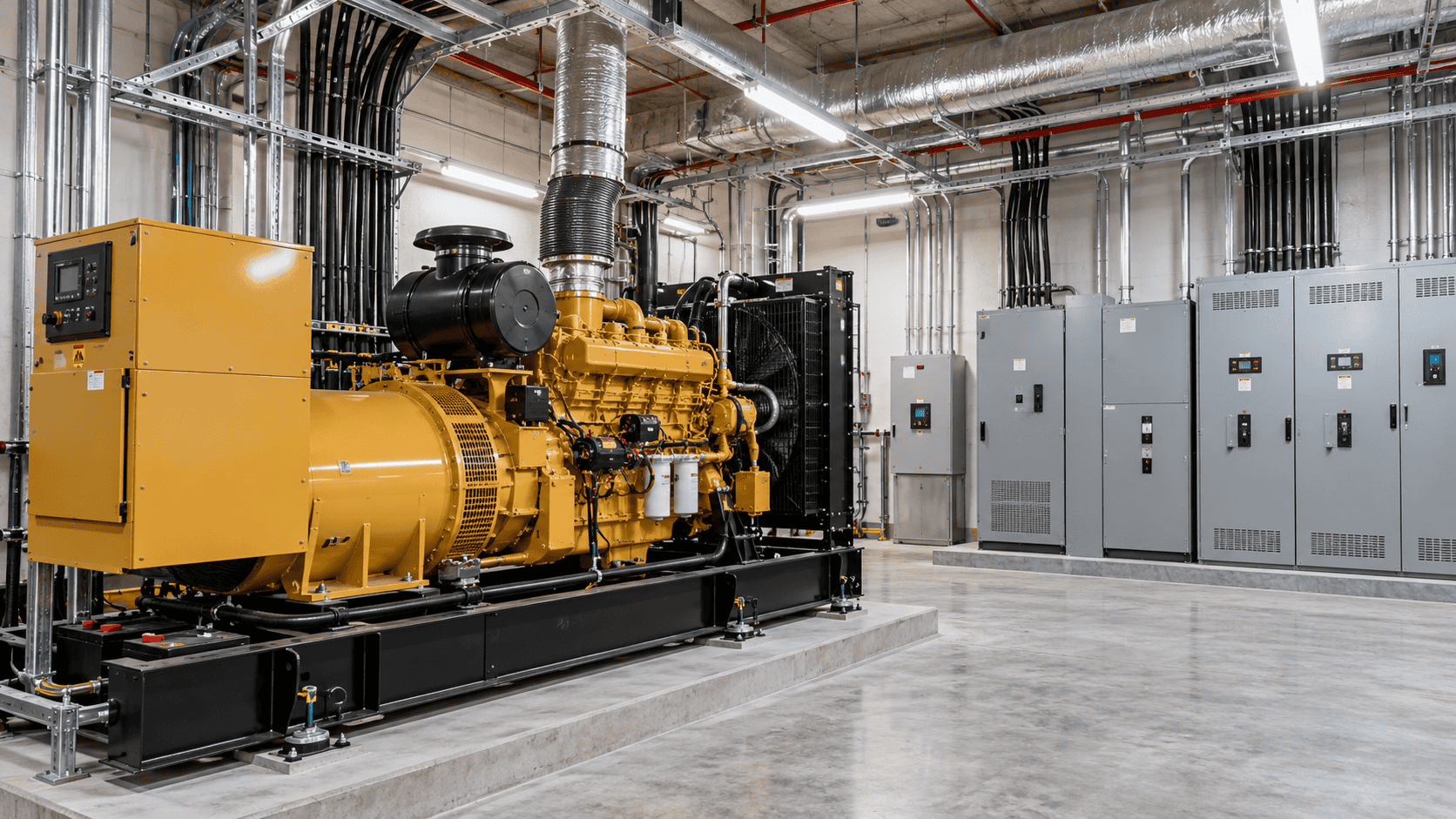
A commercial building can be nearly ready for occupancy while still carrying an unresolved emergency power issue.
The generator may be installed. Electrical work may be complete. The contractor may have finished the equipment checks.
But none of those details, on their own, confirms that the emergency power system is ready for inspection.
Emergency power is connected to more than a generator. Depending on the building, it may support fire protection equipment, emergency lighting, elevators or other critical services. Those connections need to be considered together.
For commercial contractors, developers and property managers in Alberta, the important question is not simply whether backup power is available.
It is whether the required systems will operate as intended when normal power fails.
Why Emergency Power Requirements Depend on the Building
Not every commercial building has the same emergency power requirements.
Building classification, height, occupancy, equipment and applicable code provisions all influence what must be provided.
The National Building Code – 2023 Alberta Edition addresses emergency power for fire alarm systems under Article 3.2.7.8 and certain building services under Article 3.2.7.9.
These provisions distinguish between systems that may use batteries, generators or a combination of sources and building services that require generator-supported emergency power.
That distinction matters during design and inspection.
A project team cannot assume that one generator arrangement or battery system will satisfy every building’s requirements.
The applicable obligations must be established for the specific project.
1. Confirm Which Systems Require Emergency Power
Before inspection, the project team should identify every system that depends on an emergency electrical supply.
Depending on the building, these may include:
- Fire alarm and voice communication systems
- Certain fire pumps and water supply equipment
- Designated elevators
- Smoke control equipment
- Emergency lighting and other required life-safety equipment
The next step is confirming how those systems receive power.
Are the required loads included in the electrical design? Does the installed equipment match the approved arrangement? Have changes during construction affected the original assumptions?
A complete review considers the connected systems, not just the emergency power source.
This is particularly important during alterations to existing buildings.
As discussed in our article on Calgary change-of-use projects, a proposed new use can introduce engineering requirements that were not part of the building’s original design.
2. Review Equipment, Transfer Arrangements and System Coordination
An emergency power system includes multiple components that must work together.
For generator-supported installations, these can include the generator, fuel supply, electrical distribution equipment, transfer switches and connected loads.
Each component has a different role.
The generator provides an alternative source of electricity. Transfer equipment changes the supply from normal to emergency power. Distribution equipment delivers that power to designated systems.
A review should consider whether the installed arrangement corresponds with the engineering documents and applicable requirements.
Particular attention should be given to changes made during construction.
A relocated electrical panel, revised equipment selection or additional connected load may affect the system’s original design assumptions.
The CSA C282 standard for emergency electrical power supply for buildings addresses the design, installation, operation, maintenance and testing of generator sets and associated equipment.
The edition applicable to a project must be confirmed against the governing code and project requirements.
3. Understand the Difference Between Testing, Commissioning and Verification
These terms are related, but they do not describe the same activity.
Testing checks specific equipment or system functions against defined requirements.
Commissioning is a broader process used to establish and document whether installed systems operate in accordance with the project’s intended performance criteria.
Engineering verification involves assessment by an appropriately qualified engineer where required by the applicable regulatory framework, project scope or authority having jurisdiction.
One activity does not automatically replace another.
A generator may successfully start during a test without demonstrating that every required building system has been adequately coordinated.
Similarly, a completed equipment checklist does not necessarily establish that the overall installation satisfies applicable engineering and code requirements.
The required combination of activities should be established before the inspection stage.
4. Check Inspection, Testing and Maintenance Records
Documentation is part of emergency power readiness.
Section 6.5 of the National Fire Code – 2023 Alberta Edition addresses emergency power systems, emergency lighting equipment and exit signs.
Article 6.5.1.1 generally directs emergency power system inspection, testing and maintenance to CSA C282, with separate provisions for certain healthcare systems.
For an existing building, project teams should review available maintenance and testing records alongside the current installation.
For new construction or major modifications, they should confirm which commissioning, testing and acceptance documents are required.
Useful records may include equipment information, applicable test results, approved drawings, deficiency reports and required engineering documentation.
The exact package depends on the system, project scope and authority having jurisdiction.
Missing records do not always mean the equipment is defective. They can, however, make it harder to demonstrate that the required work has been completed.
5. Identify Coordination Issues Before the Final Inspection
Emergency power problems are not always isolated electrical problems.
A fire protection system may rely on electrical equipment. Mechanical controls may need to respond to a fire alarm signal. Certain building services may have specific emergency operating requirements.
These connections create coordination responsibilities between disciplines.
A project can encounter difficulties when individual trades complete their work without confirming how the systems interact.
MNA explores similar risks in The Fire Safety Items That Commonly Get Missed During Commercial Building Renovations.
The central lesson applies to emergency power: a change to one building system can affect another.
For example, modifying commercial cooking equipment may create fire protection and electrical coordination questions. Our article on commercial kitchen fire suppression changes explains why seemingly limited equipment changes can have wider engineering implications.
Reviewing these connections before construction is complete leaves more time to resolve deficiencies.
6. Know When Engineering Input Is Needed
Engineering involvement should be considered early when a project includes:
- A new emergency generator or major equipment replacement
- Changes to emergency electrical distribution
- Additional life-safety loads
- Building alterations affecting required emergency systems
- Unclear existing conditions or incomplete documentation
- Coordination between emergency power and other building systems
The purpose of early review is to identify the actual scope of work.
It can help determine which existing components remain suitable, which modifications require further design and what documentation will be needed.
MNA Engineers provides emergency backup power engineering services for projects requiring electrical engineering assessment and coordination.
Emergency Power Inspection Readiness Starts Before Inspection Day
Emergency power readiness is not established by checking whether a generator starts.
It requires a clear understanding of the building’s applicable requirements, connected loads, installed equipment, system interactions and supporting documentation.
For contractors and developers, the most useful approach is to identify these requirements during design and carry them through construction, testing and final review.
Planning a commercial project or upgrading an existing emergency power system? Contact MNA Engineers to discuss the engineering requirements and coordination considerations before unresolved issues affect the project schedule.


