
Overwhelmed sewers, flooded streets, escalating costs – stormwater management challenges are real. But what if your roof could be part of the solution? Blue roofing offers a fresh perspective on water conservation and flood mitigation, turning rooftops into efficient water management systems.
Take Credit Valley Conservation (CVC), for instance. Their groundbreaking smart blue roof is already demonstrating the technology’s real-world impact. Keep reading to learn how blue roofing could revolutionize your approach to stormwater and create a more sustainable future.
Are Traditional Stormwater Systems Failing Us?
Our cities are facing a growing crisis: urban flooding. As climate change intensifies rainfall and urbanization increases impervious surfaces, our current stormwater infrastructure is struggling to cope.
Flooded basements and contaminated waterways are becoming more common, impacting communities and businesses. Traditional solutions, such as underground pipe expansions, are costly and disruptive.
Is there a better way to manage stormwater and mitigate flood risk? The answer might be right above our heads. Blue roofing offers a sustainable, innovative approach to this pressing problem, and it’s time to explore the possibilities.
Is Blue Roofing The Answer? A Closer Look At How It Works
Special thanks to the Skill Builder channel for the informative video on blue roofs. Please note that Skill Builder primarily focuses on British building regulations, so it’s important to consult with local professionals for guidance on Canadian installation and compliance.
Blue roofs act as temporary reservoirs instead of rapidly channeling rainwater into overwhelmed sewer systems. This innovative approach involves designing rooftops with special features to capture and store rainwater.
Here’s How It Works
- Collection: Blue roofs utilize a system of ponds, depressions, or even modular detention trays to collect rainwater during storms.
- Storage: The captured water is temporarily held on the roof. “Smart” blue roofs often include sensors and controls to monitor water levels and release rates.
- Controlled Release: The stored water is gradually released back into the environment at a controlled rate, preventing the sudden surges that can overwhelm traditional drainage systems.
Here’s How It Can Benefit You
The advantages of blue roofing extend beyond flood prevention:
- Reduced Flood Risk: By slowing and reducing stormwater runoff, blue roofs help to mitigate flooding in urban areas.
- Lower Energy Costs: The stored water acts as insulation, reducing the need for cooling in hot weather and lowering energy bills.
- Water Reuse Potential: In some cases, the collected rainwater can be treated and reused for irrigation or other non-potable purposes.
- Less Strain on Municipal Systems: Blue roofs alleviate pressure on municipal stormwater infrastructure, potentially saving on costly upgrades and maintenance.
With such a broad range of benefits, it’s no wonder that blue roofing is gaining attention as a sustainable solution for the future.
Canadian Innovation In Blue Roofing: The CVC Case Study
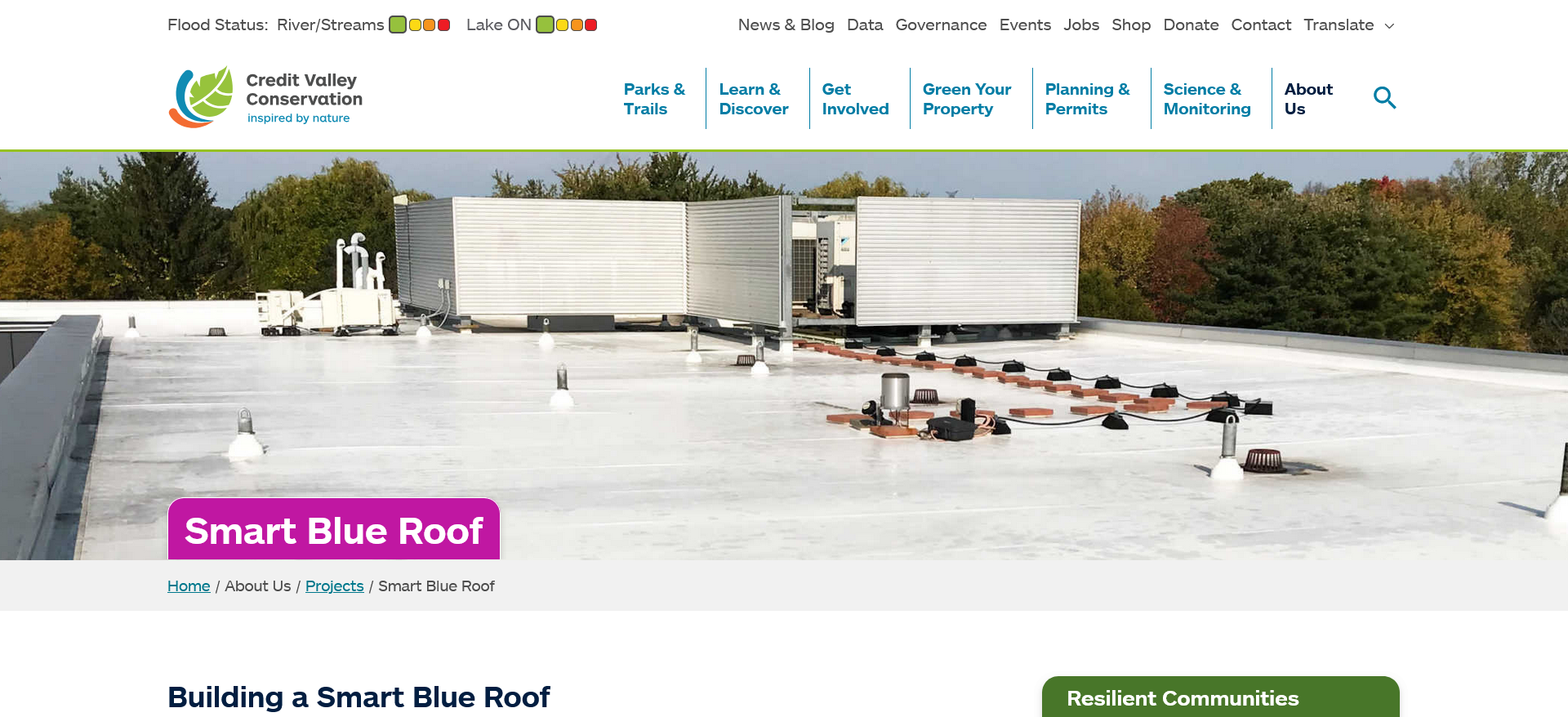
Is real-world proof of blue roofing‘s potential what you need? Look no further than Credit Valley Conservation (CVC). As a leader in environmental stewardship, CVC has constructed Canada’s first International Code Council (ICC)-compliant smart blue roof.
Their system, installed at their Mississauga headquarters, can hold up to 40,000 liters of rainwater. Not only does this significantly reduce stormwater runoff, but it also provides evaporative cooling, saving energy and lowering costs.
Measuring Success With Data
CVC isn’t just implementing blue roofing. They’re studying it. By monitoring key performance indicators (KPIs) over two years, they’ll gain valuable insights into:
- Stormwater Reduction: How much water is diverted from the storm sewer system?
- Peak Flow Reduction: How does the system impact the rate of water entering the sewers?
- Cost Savings: What are the financial benefits in terms of stormwater charges and water reuse?
- Energy Efficiency: How much energy is saved through evaporative cooling?
This data will be crucial in understanding how to scale blue roofing technology for broader adoption across Canada.
Could Blue Roofing Be Right For You?

Are you worried about the increasing frequency and severity of floods in your area? Could your business or community benefit from lower energy bills and a reduced environmental footprint? If you’re looking for a sustainable and innovative way to manage stormwater, blue roofing might be the answer.
Is Your Building A Good Candidate?
While blue roofing offers a host of advantages, it’s essential to assess its suitability for your specific situation. Factors like roof type, structural capacity, and local building codes all play a role.
- Roof Type: Blue roofs are typically best suited for flat or low-sloped roofs.
- Water Needs: If you constantly need non-potable water, blue roofing can provide a valuable source.
- Structural Capacity: A structural engineer can determine if your roof can safely support the additional weight of stored water.
- Building Codes and Regulations: It’s important to ensure your blue roof design complies with all local requirements.
Consult The Experts
Exploring the potential of blue roofing for your building or community requires expertise. Consulting professionals with experience in structural engineering and mechanical engineering can help you assess feasibility, design a system tailored to your needs, and ensure compliance with all relevant regulations.
Don’t wait for the next storm to hit. Take proactive steps toward a more sustainable future with blue roofing. Contact a qualified professional today to learn more about this innovative solution.
Frequently Asked Questions About Blue Roofing
The Future Of Stormwater Management Is Blue
Ready to explore the potential of blue roofing for your project? Contact MNA Engineers today to discuss how our expertise can help you implement a blue roof solution that meets your specific needs and contributes to a more sustainable future.