
Integrated System Testing
That Gets You to Occupancy
We run your Integrated Systems Test the right way, engineered to
code, documented for the AHJ, and designed to keep your occupancy timeline from slipping.
What Is Integrated System Testing?
What IST Actually Checks on Test Day
A straight explanation of what integrated testing is, why it’s required, and what “systems working together” really means.
Integrated System Testing proves your building’s life-safety systems actually work together when it counts, not just on their own. The fire alarm goes off. HVAC runs clean. Emergency power kicks on. Sprinklers flow. Elevators recall.
But when there’s smoke in a hallway at 2 AM, do they all talk to each other in the right order?
Do dampers close when the alarm trips? Does the elevator lock out before someone walks into a smoke-filled shaft? That’s what we test live.
This is code-mandated, the line between “everything’s installed” and “you can open the doors.” We run the sequences, document what fired and what didn’t, catch what commissioning missed, and deliver the reports the AHJ needs to sign your occupancy permit.
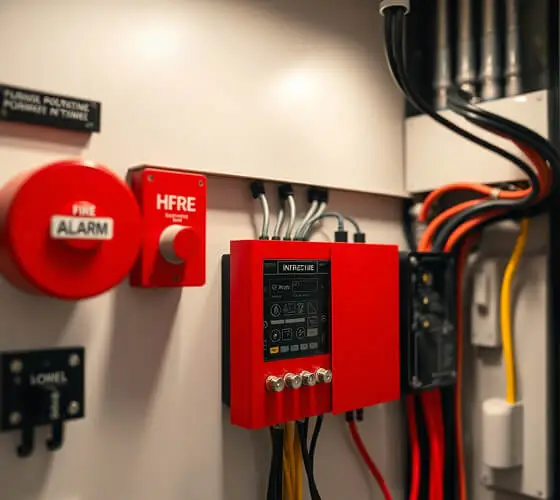
“No IST, no certificate. We test live and make sure your systems perform when lives depend on it.”
IST vs. Fire Alarm Verification
Fire Alarm Verification Isn’t IST
One checks the fire alarm on its own. The other proves the whole building reacts together when it matters.
Fire Alarm Verification
What it checks
The fire alarm system on its own
Field way to say it
“Does the alarm work?”
Scope
Devices, panel functions, inside the fire alarm system
What you’re proving
The alarm system meets verification requirements
What it prevents
Alarm system issues
Who’s typically involved
Fire alarm contractor and verifier
Systems touched
Fire alarm only
Why both matter
You need this to verify the alarm system
Integrated System Testing (IST)
What it checks
Alarm plus every connected life-safety system working together
Field way to say it
“Does the alarm make everything else do the right thing?”
Scope
Cross-system sequences and handoffs between systems
What you’re proving
The building’s integrated life-safety response works as designed and is documented
What it prevents
Failed test days, re-testing, missed milestones, and last-minute coordination chaos
Who’s typically involved
Multiple trades plus coordination across the project team
Systems touched
Fire alarm plus integrations like HVAC/smoke control, elevators, emergency power, sprinklers, electrical, and more
Why both matter
You need this to prove the whole building reacts properly for closeout and AHJ review
When IST Is Required
If your project has integrated life-safety systems and a target occupancy or AHJ date, IST isn’t optional. It’s mandatory code
validation.
New Commercial Construction
Multiple life-safety systems mean IST is mandatory for occupancy. Fire alarm, HVAC, emergency power, elevators, sprinklers, they all have to prove they communicate and respond in sequence, not just individually.
Major Renovations Or Tenant Improvements
If the scope changes how systems interact, new tie-ins, revised sequences, control logic, you’re in IST territory. The AHJ won’t sign off on assumptions.
Any Change To Life-Safety System Sequences
New devices, panel updates, equipment additions, or control logic changes trigger validation requirements. If the sequence changes, you prove it works under operating conditions.
Upgrades That Affect Integrated Systems
HVAC tied to smoke control. Emergency power affecting elevators. Fire alarm triggering dampers or fans. When one system depends on another’s signal, IST validates that handoff.
Before Occupancy And AHJ Review Milestones
If IST isn’t planned early into closeout, late integration failures mean rework, retesting, and delayed occupancy with holding costs stacking up daily.
What Systems Get Pulled Into IST
If it talks to the fire alarm or changes building behaviour in an emergency, it belongs in integrated testing.
Fire Alarm
Checks panel triggers and output signals.
Why: The “brain” of the sequence

Fire Suppression
Verifies waterflow and suppression signals.
Why: Prevents sloppy response
Smoke Control
Dampers and fans respond to fire mode.
Why: Life-safety issue
HVAC Integration
Units shut down or override as required.
Why: Can feed smoke if failed
Emergency Power
Picks up loads, keeps equipment online.
Why: Power change continuity

Elevators
Recall and fire mode functions.
Why: Must respond every time

Electrical Interfaces
Critical controls and interlocks behavior.
Why: Bad interlocks break
systems

Comms Pathways
Signals reach the right places.
Why: Silent systems fail
A Step-By-Step Approach on How IST Runs
No guesswork. A clean sequence from intake to test day to final report, built around your occupancy or AHJ milestone.
Step 1: Intake and target date check
We confirm where you’re at and what you’re up against for timing.
Address, date, systems, contact.
Step 2: Scope lock and sequencing plan
We map what systems need to “talk” during the test and what order the sequences run. Planning it tight.
Step 3: Trade coordination and scheduling
We confirm who needs to be present. Typical lead time is 3 to 6 weeks.
Step 4: Site readiness and document check
Confirming key pre-test documentation. If something is missing, we flag it early.
Step 5: Execute integrated testing on site
We run the plan and verify cross-system interactions. The real proof.
Step 6: Capture results & sign-offs
Document what happened, record issues, complete sign-off sheets.
Step 7: Final documentation issued
Comprehensive IST report within 3-5 business days.
We Run the Room So IST Doesn’t Fall Apart
When too many trades are involved, IST fails on coordination, not effort. We keep
it tight from planning to sign-off.
MNA Engineers takes points so IST doesn’t go sideways when everyone shows up thinking
someone else is running the show. No burned days. No scrambling. No pissed-off GCs.
Show Up Ready, or You’ll Burn the Day
This checklist keeps IST clean, on schedule, and free from avoidable retesting.
Pre-IST Site Readiness Requirements
This checklist keeps IST clean, on schedule, and free from avoidable retesting.
View Detailed Checklist
Site and system readiness
- All systems in scope are fully installed and powered
- Fire alarm programming is complete for the sequences being tested
- Panels, rooms, risers, and control equipment are accessible
- Devices are labeled and match what’s on drawings where applicable
- Any required commissioning and acceptance testing is complete
People and coordination
- Primary project contact is confirmed for test day
- All required trades are confirmed to attend (or be on-call as planned)
- One-week notice has been sent to all testing participants by email
- Building occupants have been given 48 hours notice where applicable
Safety
- All participants have completed site safety orientation and training
- Proof of training completion is provided ahead of time
- PPE is ready for everyone on site (hard hat, eye and ear protection, safety footwear, vest)
Pre-test documentation ready
- Written confirmation from design professionals that acceptance testing is complete and systems are ready
- Written confirmation from installing contractors that systems are installed per design and ready for IST
- Fire alarm verification report (CAN/ULC-S537) is available if applicable Any required certificates and supporting test reports are collected and ready
S1001 Is the Rulebook for IST
This checklist keeps IST clean, on schedule, and free from avoidable retesting.
It focuses on three things:
- Integration requirements (system handoffs)
- Test sequences (structured scenarios that catch gaps)
- Documentation (proof trail for closeout and AHJ review)
Where We Come In
Lock down scope early
Systems, dates, and AHJ milestones confirmed before trades show up.
Sequence tests efficiently
Fire alarm, HVAC, elevators, emergency power, run in order.
Verify live handoffs
Smoke detector trips. Damper closes. Fan shuts down. Elevator recalls. We test it live and document what happened
Capture results in real-time
Results, observations, sign-offs logged during testing, not after.
Deliver closeout-ready reports
Full IST report showing what was tested, what passed, what needs follow-up, and what the AHJ needs to sign off
IST Done Right, the First Time
MNA runs IST like an engineering deliverable, no a checkbox. Engineering-led planning, tight
coordination, and clean reporting.
Engineering-led
We map sequences and integrations up front so the test runs clean and nothing gets missed.
Precision Testing
We focus on system handoffs. That’s where projects fail when nobody’s watching.
Protective Coordination
We align trades and catch gaps early so you’re not burning days on no-shows.
Closeout Reporting
Clear results delivered fast so your occupancy date doesn’t slip.
The Paperwork That Actually Closes the Job
Full Test Results
Full Test Results
Sign-off Sheets
Deficiency Items
The Cost of Getting IST Wrong
|
Impact Area
|
Great IST (Done Right)
|
Failed IST (Done Wrong)
|
|---|---|---|
|
Schedule impact
|
Testing runs as planned and supports your occupancy
|
Milestones slip because building cannot be signed off
|
|
On-site efficiency
|
One clean test day, clear sequencing
|
Wasted test day, reruns, everyone back on site
|
|
Costs
|
Fewer extra visits, fewer delays
|
Added labour, site time, and schedule knock-on costs
|
Book IST Before the Schedule Books You
If you have an occupancy or AHJ date, get IST on the calendar early. The window gets tight fast.
Typical Lead Times
Best case: 2 weeks out. Typical: 3-6 weeks.
What We Need
Site address, target date, systems list, contact info.
After You Request IST, Here’s What We Do Next
Step #1
Confirm Request
We acknowledge receipt and check basics.
Step #2
Review Timeline
We flag pressure points if dates are tight.
Step #3
Lock Scope
Confirm which systems need proving.
Step #4
Coordinate Trades
Identify who needs to be present.
Frequently Asked Questions
What is Integrated System Testing (IST)?
Integrated System Testing proves your life-safety systems work together as one coordinated setup, not just separate parts. It checks how systems “talk” and respond in sequence under required scenarios. This is where integrations get verified and documented for real closeout.
Is IST the same as fire alarm verification?
No, they are different checks with different scopes. Fire alarm verification confirms the fire alarm system works properly on its own. IST confirms what happens after the alarm triggers, including how other building systems respond, interact, and sequence together.
When is IST required?
IST is commonly required on new commercial builds, major renovations, or any project where life-safety systems are integrated and sequences can change. If you have a target occupancy date or an AHJ milestone tied to integrated performance, IST needs to be planned early.
What systems are usually included in IST?
IST scope depends on the building, but it usually involves fire alarm plus any systems tied into emergency sequences. That can include HVAC and smoke control, elevators, emergency power, suppression-related signals, electrical interfaces, and other controls that change building behaviour during an event.
How long does IST take?
The duration depends on complexity, how many integrations exist, and how ready the site is. Smaller, straightforward projects can move quicker. Large or complex buildings take longer because there are more sequences, more trades involved, and more points where integrations need to be proven.
How far in advance should we schedule IST?
Best case is about 2 weeks out, but typical scheduling is 3 to 6 weeks depending on building complexity and current workload. If your occupancy or AHJ date is tight, do not wait. IST needs a real slot on the schedule, not a last-minute scramble.
What do you need from us to book IST?
To lock in scheduling and scope, we need the site address, your target occupancy or AHJ date, a list of systems requiring testing (HVAC, fire alarm, plumbing, electrical), and the primary project contact. With that, we can confirm timing and coordination needs fast.
What needs to be ready before test day?
Systems in scope should be installed, powered, and ready to perform under the required sequences. Panels and equipment must be accessible, trades need to be confirmed, and key pre-test confirmations and documents should be gathered in advance. This is how you avoid burning a full test day.
What documentation do we receive after IST?
Clients receive a comprehensive IST report that includes the test results, observations made during implementation, and the required sign-off sheets tied to the testing outcomes. Turnaround is typically 3 to 5 business days after testing is complete, so closeout does not stall.
Do existing buildings ever need IST?
Yes. If an existing building has upgrades or modifications that change life-safety integrations or sequences, integrated testing can be required again. If systems that used to operate one way are now tied into new equipment, controls, or programming, the integrated response has to be proven.
Book IST Now, Protect Your Occupancy Date
We run CAN/ULC-S1001 aligned IST across Alberta, tight coordination, clean reporting, no nonsense. Your closeout moves forward, not sideways.